Understanding RO4350B Material
The evolution of PCB (Printed Circuit Board) technology has led to the development of specialized materials tailored for high-frequency applications. Among these materials, RO4350B stands out for its remarkable properties and performance in complex electronic systems. This article delves into the characteristics, manufacturing processes, and applications of RO4350B PCBs, providing valuable insights for engineers and manufacturers alike. When exploring options, RO4350B PCB manufacturing offers comprehensive insights into the benefits and challenges associated with this innovative material.
What is RO4350B and Its Key Properties?
RO4350B is a high-frequency laminate developed by Rogers Corporation that combines hydrocarbon and ceramic materials. This unique composition gives RO4350B its renowned dielectric properties, which are essential for modern RF (Radio Frequency) applications. Key properties of RO4350B include:
- Dielectric Constant: With a dielectric constant of approximately 3.48, RO4350B provides excellent impedance control.
- Low Insertion Loss: The material exhibits lower insertion loss at high frequencies, ensuring signal integrity over longer distances.
- Thermal Stability: Its thermal performance is exceptional, allowing it to maintain its properties under varying temperature conditions.
- Low Moisture Absorption: This feature enhances performance reliability in humid environments, making it suitable for outdoor applications.
Comparing RO4350B with Other PCB Materials
While numerous PCB materials cater to high-frequency applications, RO4350B distinguishes itself from alternatives such as FR-4 and PTFE laminates. The following table summarizes key differences:
PropertyRO4350BFR-4PTFEDielectric Constant3.484.52.1-2.9Insertion LossLowHigherLowThermal StabilityHighModerateHighCostModerateLowHigh
This comparison indicates that RO4350B holds advantages in both performance and cost-effectiveness for specific high-frequency applications, particularly in telecommunications and aerospace sectors.
Advantages of Using RO4350B in High-Frequency Applications
Engineers and manufacturers favor RO4350B for several compelling reasons:
- High Reliability: The material's durability and resistance to environmental factors ensure consistent performance and longevity.
- Versatility: Its compatibility with various applications, including RFID tags and satellite communication systems, makes it a go-to option in the industry.
- Improved Signal Integrity: Enhanced impedance control helps in preserving signal clarity, which is crucial in high-speed communication systems.
- Cost-Effectiveness: While RO4350B is slightly more expensive than traditional materials, its performance justifies the investment in high-performance applications.
The Manufacturing Process of RO4350B PCBs
The manufacturing of RO4350B PCBs involves several critical stages, each contributing to the final product's quality and performance. Understanding these processes is essential for ensuring high manufacturing standards and efficiency.
Stages of RO4350B PCB Fabrication
The PCB fabrication process for RO4350B consists of the following stages:
- Material Preparation: The first step involves preparing the RO4350B laminates, which includes cutting and treating the material for adhesion.
- Layer Stacking: Designers create multilayer PCBs by stacking layers of RO4350B, embedding vias and traces for connectivity.
- Imaging: A photoresist layer is applied, and exposure to UV light creates the circuit pattern, allowing for accurate etching.
- Etching: Excess copper is removed through chemical etching, revealing the circuit traces on the laminate.
- Drilling: Vias and holes are drilled to accommodate electrical connections.
- Finishing: Surface finishes like ENIG (Electroless Nickel Immersion Gold) improve solderability and protect against oxidation.
Equipment and Technology Used in Production
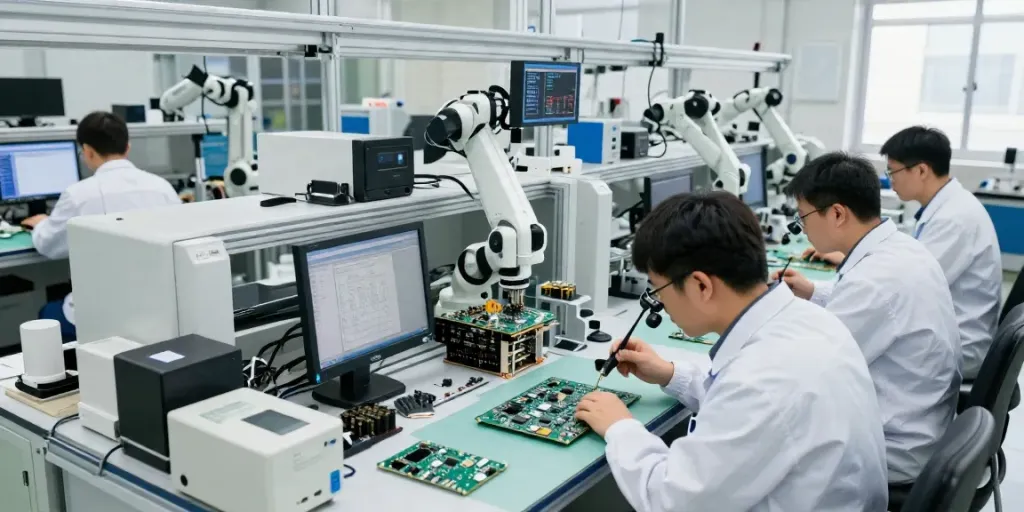
Innovation in PCB manufacturing relies heavily on advanced technologies and equipment, including:
- Laser Drilling Machines: For precise and efficient drilling of microvias due to the thickness and density of RO4350B materials.
- Automated Optical Inspection (AOI): This technology ensures quality control by detecting defects in the PCB layout during fabrication.
- Fluid Dispensing Systems: These allow for accurate application of adhesives and other materials during the manufacturing process.
Quality Control Measures in RO4350B Manufacturing
Maintaining stringent quality control is crucial in RO4350B PCB manufacturing. Techniques employed include:
- Electrical Testing: Ensuring that circuits perform as intended under real-world conditions.
- Dimensional Inspection: Measuring the physical characteristics of PCBs to ensure they meet specified tolerances.
- Thermal Analysis: Conducting tests to evaluate how the PCB withstands thermal stress, ensuring reliability in high-temperature environments.
Applications of RO4350B PCBs
RO4350B's unique properties make it suitable for a wide range of applications across various industries, particularly in areas where high-frequency performance is critical.
Common Uses in Telecommunications and RF Applications
In telecommunications, RO4350B is commonly used in the production of:
- Base Stations: Essential for cellular networks, where reliable signal transmission is crucial.
- RFID Tags: Employed for tracking and inventory systems, benefiting from RO4350B's high-frequency capabilities.
- Satellite Communication: Used in satellite transceivers, providing robust performance in harsh environments.
Advantages in Automotive and Aerospace Industries
In the automotive sector, RO4350B's performance helps in developing advanced driver-assistance systems (ADAS) and infotainment systems. In aerospace, it's utilized in communication systems and radar applications, where reliability and performance are paramount.
Future Trends in RO4350B Utilization
As the demand for high-frequency applications continues to grow, so too will the utilization of RO4350B PCBs. Emerging technologies such as 5G networks and IoT devices are expected to drive further adoption, pushing innovations in manufacturing processes and material enhancements.
Challenges in RO4350B PCB Manufacturing
Despite its advantages, the manufacturing of RO4350B PCBs is not without challenges. Addressing these effectively is vital for maintaining competitive production standards.
Common Production Issues and Solutions
Some prevalent production issues include:
- Delamination: This can occur due to improper bonding. Solutions involve optimizing the bonding process and ensuring consistent quality in material preparation.
- Etching Defects: Uneven etching can affect performance. Employing advanced imaging systems can mitigate this challenge.
Cost Implications of High-Frequency Materials
While RO4350B offers clear performance advantages, its cost can be a barrier for some manufacturers. Maintaining a balance between cost and performance is essential, with potential solutions including bulk purchasing and process optimization.
Addressing Misconceptions about RO4350B
There are common misconceptions regarding RO4350B, such as it being solely for high-budget projects. In reality, its cost-effectiveness in terms of performance longevity makes it suitable even for mid-range applications.
Insights from Industry Experts
Industry experts provide valuable insights into the future of RO4350B PCB manufacturing, emphasizing the importance of continual innovation and adaptation to market demands.
Case Studies on Successful RO4350B Applications
Several case studies highlight the successful implementation of RO4350B in various projects. For instance, a leading telecommunications company leveraged this material in their 5G infrastructure, resulting in lower signal degradation and enhanced user experience.
Predictions for RO4350B Manufacturing in 2026
Experts predict that the demand for RO4350B PCBs will significantly increase as more industries adopt high-frequency technologies, leading to advancements in manufacturing techniques and possibly new material formulations.
Best Practices for Engineers and Manufacturers
To maximize the benefits of RO4350B, engineers should focus on:
- Continuous Education: Stay updated on the latest technological advancements and best practices in PCB design and manufacturing.
- Strong Supplier Relationships: Collaborate with trusted suppliers to ensure consistent material quality and support.
- Emphasizing Quality Control: Implement rigorous testing protocols to safeguard against common production defects.